Start By Comparing Removal
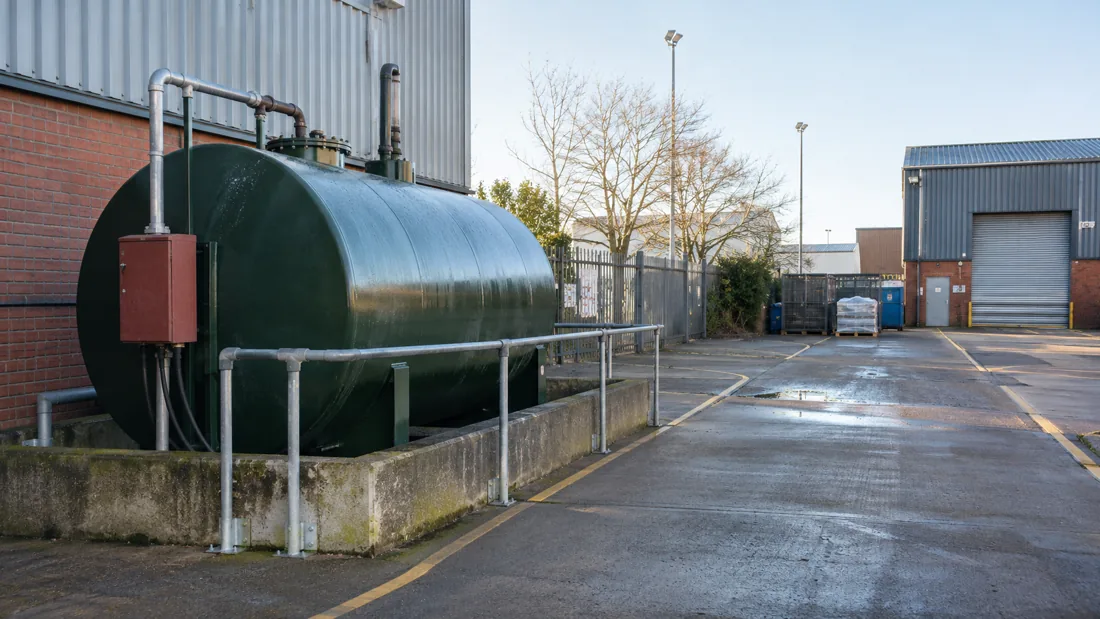
Explain why the tank cannot readily be taken out. A vessel under an occupied building, near sensitive structures or behind severely restricted access raises different questions from an accessible tank in an open yard.
The Environment Agency’s underground tank closure guidance identifies removal as the starting approach for redundant systems. Where removal is not possible, suitable permanent filling can be considered after preparation. The selected approach needs to fit the actual site conditions.
Describe any future development. A lightweight fill should not be assumed to provide a structural solution for vehicle loading, foundations or a new slab. Where ground stability or building loads matter, an appropriate designer must assess them separately from the tank-filling method.
Understand What Filling Does Not Solve
Filling occupies the prepared internal void. It does not remove the external tank shell, prove that it has never leaked or clean contaminated ground beyond the vessel. The tank remains a feature of the property after the work.
A known leak history, stained soil, oil odour or unexplained product loss should be disclosed before the method is selected. Filling without considering those signs can leave the main environmental issue unresolved. Environmental assessment may need to precede or accompany closure.
Tank-filling foam is distinct from firefighting foam and is not a general fire-protection treatment. Ask for the proposed material specification, its suitability for the former contents and the intended closure objective. Avoid choosing a material from a product name alone.
Remove The Contents Before Filling
The assessment needs the approximate remaining volume and the product history. Tanks that have been unused for years can still contain a mixture of fuel, water and settled sludge. The absence of a working gauge does not establish that the tank is empty.
Recoverable fuel needs an agreed receiving destination, while unusable contents and cleaning residues require a classified waste route. Preparation can be a substantial part of the overall job, especially if access to low points or compartments is restricted.
The provider should explain the cleaning and making-safe stages before any fill is introduced. Ask how preparation will be verified and how the filling method deals with the vessel’s internal shape. Do not open or enter a buried tank to estimate its condition yourself.
Check Capacity And Access
Drawings and historical installation records help establish tank dimensions, depth and compartments. A nominal capacity is useful, but an uncertain volume can affect material quantities and the completion record. Flag any uncertainty before a quotation is accepted.
Photograph existing external access points and show the route from the vehicle position. Hose access can be less intrusive than excavation, but distance, level changes, working space and safe segregation still affect the method. Describe whether the area is indoors, beneath paving or inside an active yard.
The assessment also needs to identify pipework and other possible escape paths. Fill arrangements and redundant connections have to be addressed within the closure plan. This is specialist work, so the site contact should provide information rather than attempt to prepare connections.
Compare The Full Cost Of Closure
Foam volume is one cost driver, alongside fuel uplift, cleaning, access preparation and the controls needed for the site. Restricted working hours or repeated mobilisation can also affect the quotation. A cheap material allowance says little about the complete closure cost.
If another filling material is proposed, compare its weight, access needs, future removal implications and suitability. Concrete or other engineered materials are not interchangeable with foam. The intended use of the land should guide the specification and any separate engineering assessment.
Ask whether making good, old fill-point removal and waste collection are included. Establish how a difference between estimated and actual tank volume will be handled. A clear scope should explain the chosen end state as well as the materials being brought to site.
Leave A Permanent Property Record
A completion record should identify the tank location, former use, preparation, filling material and recorded quantity used. Keep drawings or photographs that explain the position, especially if access covers or visible connections are removed afterwards.
Ask the provider which fill certificate and waste documents will be supplied for this particular job. A record of material installed is useful evidence of the work, but it should not be described as proof that all surrounding land is uncontaminated or structurally suitable for redevelopment.
Keep the information available to future property managers, buyers and contractors. A filled tank should be described as filled and left in place, rather than removed. Before any later digging or building works, share the closure record with the responsible designer and contractor so the retained vessel is accounted for.
Your Questions
Can A Foam-Filled Tank Be Used Again?
A foam-filled tank is permanently closed and should not be treated as reusable fuel storage. If future storage might be needed, raise that before selecting the closure route. Discuss replacement or another properly assessed arrangement instead of assuming the foam can be removed and the old vessel simply put back into service.
Does Foam Filling Remove The Need For Ground Investigation?
Foam filling does not replace a ground investigation where the history or condition gives reason to suspect leakage. The method deals with the tank’s internal void after preparation. Tell the provider about staining, odours, unexplained fuel losses and previous reports so environmental concerns are considered before the closure method is agreed.