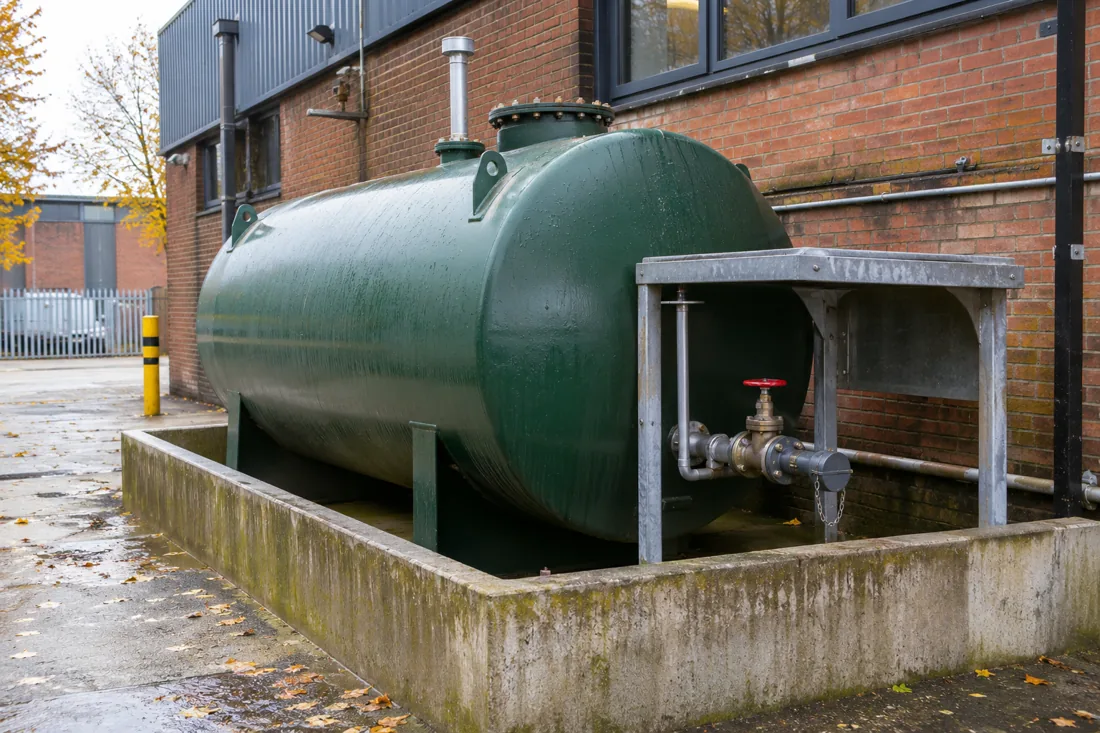
Define Permanent Or Temporary Closure
Permanent closure should remove the possibility of an accidental refill and establish what happens to the tank and associated equipment. Temporary shutdown needs a clear management arrangement because the storage and its hazards have not disappeared.
A mothballed tank may still contain fuel or residues. If future reuse is only a possibility, say how long the site expects to hold it and who remains responsible. Do not describe it as decommissioned solely because a valve has been shut or a delivery contract ended.
For underground storage, Environment Agency guidance addresses permanent and temporary closure. Removal is the starting point for redundant buried tanks, with filling considered where removal is not possible.
Map The System Boundaries
Identify the vessel, fill point, vents, supply and return lines, gauges, pumps and any connection to neighbouring plant. Old drawings can help, but alterations and shared services should be checked rather than accepted from a drawing alone.
A remote fill point is especially important. Leaving an accessible connection after closure can create confusion for future staff or delivery drivers. The scope should state how redundant connections will be dealt with and how retained parts will be marked in the records.
If the tank once served a generator or heating plant, the relevant maintenance contact needs to confirm the operational release. The fuel contractor should not have to infer whether a circuit or process is still required from the tank’s appearance.
Agree The Contents Strategy
Capacity and current volume are different figures. Send both if known, together with the fuel type, previous products and any record of water, sludge or unexplained loss. Unknown contents may require sampling before the method and waste route can be settled.
Recoverable stock can sometimes be retained, but it needs a suitable destination and condition assessment. Any transfer to another system should account for compatibility and capacity. Unusable fuel, water and deposits need separate classification and containment.
The initial fuel estimate may change after measurement. Ask how additional uplift, storage or waste will be priced and authorised. This is more useful than a single headline price based on the assumption that the tank is already empty.
Select Removal Or Closure In Place
Physical removal can release the footprint and make the former tank location easier to inspect. Access, excavation, foundations and transport constraints may influence whether a whole lift or sectional removal is appropriate.
Where a tank has to remain, foam filling is an option for assessment rather than an automatic shortcut. The vessel still needs preparation, and the chosen material must suit the tank and the intended future use of the area.
Filling a tank does not establish that the surrounding land is clean. A known leak, stained ground or unexplained historical fuel loss may require environmental advice before closure proceeds. Keep that investigation distinct from the physical tank work.
Plan Interfaces With Other Contractors
Decommissioning often sits within a wider project. Agree who controls isolations, permits, excavation, lifting, demolition and reinstatement. A short written responsibility schedule helps prevent a gap between the tank work and the main contractor’s assumptions.
The commercial work area may need to remain partly operational. Identify pedestrian access, neighbouring loading bays and emergency routes before reserving tanker or crane space. If the work is inside a building, describe the ventilation and the route for removing material.
Where dangerous substances create workplace fire or explosion risks, HSE’s DSEAR guidance is relevant to the assessment. DSEAR is the Dangerous Substances and Explosive Atmospheres Regulations 2002. The detailed method should reflect the actual contents and tasks, not simply repeat the same precautions for every closure.
Record Exactly What Is Left
A useful closure record identifies tank location, capacity where known, former contents, closure date and the work completed. If a vessel remains, record its position and filling material so future contractors know it is present.
Agree the supporting documents with the provider. Depending on scope, these can include preparation records, waste documentation, disposal confirmation, fill records and photographs. Gas-free records or other testing documents relate to defined work and conditions, rather than proving the site permanently safe.
The cost drivers include residual product, cleaning, access, the closure route and the required final surface. Make reinstatement and follow-on investigation explicit. A completed decommissioning package should allow a future property manager to understand the end state without relying on the person who supervised the visit.
Your Questions
Is An Empty Tank Already Decommissioned?
An empty tank is not necessarily decommissioned. Residues, vapours and live connections may remain, and a remote fill point may still allow a delivery. Closure needs an assessed method and a record of the outcome. Explain what has already been done, but do not assume a previous fuel uplift completed the whole process.
Can Decommissioning Be Done Before A Property Sale?
Tank decommissioning can be scoped around a property transaction, but survey, access and any environmental concerns should be raised early. Tell us the buyer’s requested evidence and the completion date. Keep removal or filling records with the property documents, and describe accurately whether the former tank is gone or remains in place.